10 Best Toy Trucks for the Beach in 2026?

Time:2026-11-03 Author:Madeline
0%

A beach toy truck has a tougher job than it appears. It must roll over loose sand, survive splashes, and remain easy to clean after play. What is the best toy truck for the beach? The answer depends on a child’s age, the type of sand, and whether the truck will be used near water. A large, simple dump truck may suit younger children, while older kids might prefer working parts or a remote-control model. Bigger wheels can help on soft sand, but they do not guarantee smooth driving.

This guide to the 10 best toy trucks for the beach in 2026 focuses on useful details, not just bright colors or bold packaging. We consider wheel design, sturdy construction, comfortable handling, and how easily sand can be rinsed away. We also flag practical concerns, such as small parts, battery compartments, and manufacturer age guidance. Check product instructions before taking a toy into water; water-resistant does not always mean waterproof. Some trucks may look powerful in photos but struggle in deep, dry sand. That matters. No single pick will fit every beach, and even a rugged toy can wear down when left salty and gritty. A little cleanup helps. The comparisons ahead aim to make the choice clearer, while leaving room for a child’s own preferences and the occasional sandy surprise.
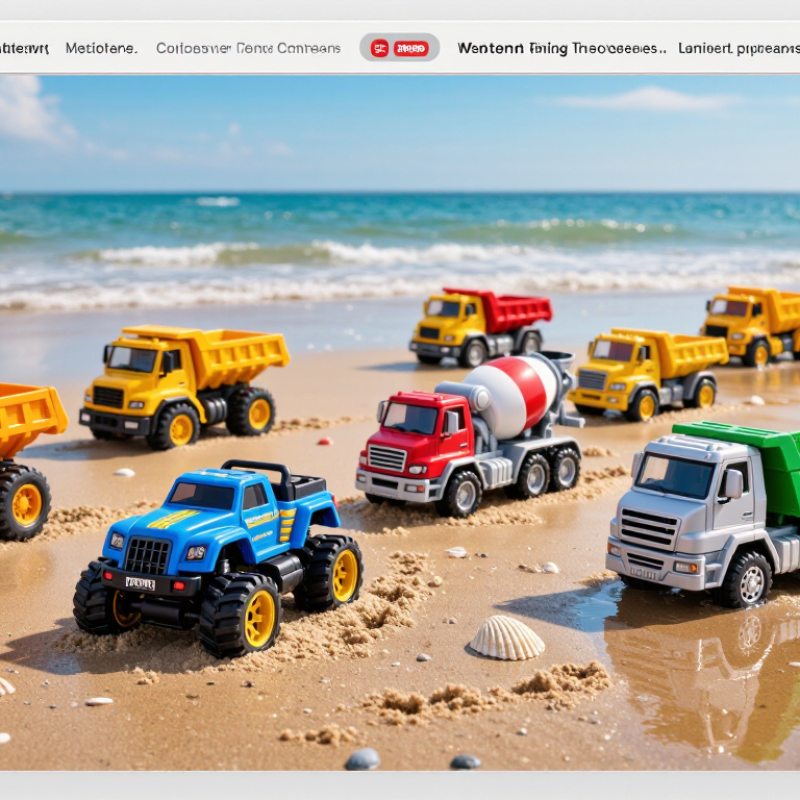
10 Best Toy Trucks for the Beach in 2026?

How Beach Toy Trucks Are Built for Sand and Shoreline Play

10 Best Toy Trucks for the Beach in 2026?

How Beach Toy Trucks Are Built for Sand and Shoreline Play

Beach trucks meet loose sand, damp grit, and salty water in one outing. The U.S. Geological Survey’s Wentworth scale classifies sand particles from 0.0625 to 2 millimeters. Tiny grains can work into narrow axle gaps and wheel joints. They can jam moving parts. Wide wheels help spread a truck’s weight, while open wheel wells make rinsing easier. Neither feature guarantees it will roll well on every beach; wet, compact sand behaves differently from soft, dry sand.

Materials matter, too. Plastic bodies avoid rust, but can still become brittle after repeated sun exposure. Metal axles and fasteners need corrosion-resistant finishes, especially near the shoreline. ASTM B117 uses a controlled salt-fog test with a 5% sodium chloride solution to compare corrosion resistance. That test does not predict exactly how long a toy will last at the beach. Rinsing still matters.

Look for sturdy, rounded edges, securely attached parts, and parts that are easy to clean. A simple design may be easier to inspect for trapped grit than a truck with many small details. ASTM F963 provides safety requirements for toys, but it does not guarantee beach performance. Check age guidance and supervise young children around small parts. A practical beach truck should be easy to carry, rinse, and dry—not just impressive on the sand.

Criteria for Comparing Toy Trucks in 2026

Choosing a beach truck in 2026 means judging more than its color or size. Compare wheel width, tread, and ground clearance. Wide wheels usually cross loose sand more easily, while deep tread can collect grit. A quick push across damp and dry sand reveals more than a shelf test. Look for a body that feels sturdy without sharp edges or flimsy joints. Salt and sand are tough on moving parts. Rinse access matters.

Capacity is useful, but bigger is not always better. A small bucket of wet sand can strain a lightweight truck, so compare its load guidance and stability. Check whether the wheels turn freely after a sandy outing. Simple shapes are often easier to clean than trucks with tiny molded details. Inspect age guidance and small detachable parts before buying for a young child. I would not treat one beach test as a final verdict; sand texture and moisture change performance. A truck that rolls well near the water may bog down in dry dunes. That difference matters.

Ten Notable Toy Trucks for Beach Play

Beach play rewards trucks that roll easily, rinse clean, and survive a little rough handling. A wide-wheel dump truck carries damp sand without tipping; a front loader scoops it into small piles. A flatbed hauls shells, while a tanker adds pretend water deliveries. A cement mixer turns steadily, though sand can jam its drum. Keep it simple.

A tow truck gives stuck toys a rescue, and a fire engine invites imaginative shoreline missions. A garbage truck can collect seaweed, but use only clean, safe debris. A logging truck with chunky, fixed logs is easier to manage than one with tiny loose pieces. A monster truck handles uneven sand, while an articulated hauler bends around shallow ruts. These ten styles offer different kinds of play, not just different shapes. Rinse after play. Check for trapped grit around wheels and moving parts, and follow the maker’s age guidance. Small pieces disappear quickly in sand; that is easy to overlook.

10 Best Toy Trucks for the Beach in 2026? - Ten Notable Toy Trucks for Beach Play

A practical comparison of common toy-truck styles for sand play. Dimensions and materials below are typical examples, not specifications for a particular product; actual sizes, age labels, and features vary by model.

Toy Truck Type Typical Length Common Construction Beach-Play Strength Useful Feature Care After Play Typical Age Label
Dump Truck 25–40 cm (10–16 in) Polyethylene or polypropylene body; plastic wheels High: carries and tips loose, dry sand Tilting bed makes loading and unloading simple Rinse the bed and wheel areas to remove grit Often 3+; check the product label
Front Loader 25–38 cm (10–15 in) Plastic body with a movable front bucket High: scoops and shifts sand near the waterline Bucket can be raised and lowered for pretend construction Rinse joints and moving parts; let dry fully Often 3+; check the product label
Cement Mixer Truck 25–40 cm (10–16 in) Plastic body and rotating drum Moderate: best for transporting damp sand in small amounts Rotating drum adds interactive play Flush the drum with clean water so sand does not remain inside Often 3+; check the product label
Monster Truck 20–35 cm (8–14 in) Plastic body with oversized plastic or rubber-like tires High: large wheels can roll over uneven, soft sand Wide tires help it handle small sand mounds Rinse tread grooves and axles after use Often 3+; check the product label
Articulated Hauler 30–45 cm (12–18 in) Plastic body with a jointed frame and tipping bed High: suited to hauling sand across a play area Pivoting center joint helps it turn on uneven ground Rinse the frame joint and bed hinge thoroughly Often 3+; check the product label
Tow Truck 25–40 cm (10–16 in) Plastic body with a movable hook or tow arm Moderate: works best on firm, packed sand Hook or lifting arm supports rescue-themed play Rinse moving parts; check that the hook is clear of sand Often 3+; check the product label
Fire Engine 25–40 cm (10–16 in) Plastic body; some styles have a movable ladder Moderate: suitable for pretend play on compact sand Extending or rotating ladder, when included Rinse ladder joints and openings; dry before storage Often 3+; check the product label
Pickup Truck 20–35 cm (8–14 in) Plastic body with an open cargo bed Moderate: easy to load with shells or small amounts of sand Compact size is convenient for carrying to the beach Rinse the cargo bed, wheels, and underside Often 3+; check the product label
Tanker Truck 25–40 cm (10–16 in) Plastic chassis with a molded tank body Moderate: good for imaginative delivery and transport games Smooth tank shape is easy to rinse clean Rinse exterior surfaces and any openings; do not store wet Often 3+; check the product label
Tracked Dump Truck 20–35 cm (8–14 in) Plastic body with plastic or flexible track-style treads High: broad treads can provide traction on loose sand Tracked base and tipping bed combine hauling and dumping Rinse sand from tread grooves and moving parts Often 3+; check the product label

Choosing a Truck by Age, Size, and Play Style

Choosing a beach truck is less about flashy features and more about who will use it. For toddlers, look for a chunky, lightweight shape with rounded edges and a handle they can grip. Check the maker’s age guidance, especially if the truck has small detachable parts. Older children may enjoy steering, loading, and tipping mechanisms that let them build a whole sand-hauling routine. Simple designs can still be surprisingly engaging.

Size matters on soft sand. Small wheels may sink near the waterline, while wider wheels usually roll more easily across dry, loose sand. A compact truck fits neatly in a beach bag, but a larger one can carry shells, damp sand, or a small bucket. Consider how far you’ll walk from the car, too. I once underestimated that distance. A big truck gets heavy fast. Match the truck’s capacity to your child’s play style: hauling, digging, pretend construction, or relaxed pushing along the shore.

Tips: Choose sturdy wheels and a body that rinses clean. After play, wash off salt and grit, then let the truck dry fully before storing it. For younger children, stay close during play, particularly near water, and inspect the toy for cracks or loose pieces. Sand gets everywhere. It can also jam moving parts, so fewer hinges may mean less fuss.

10 Best Toy Trucks for the Beach in 2026? — Choosing by Age, Size, and Play Style

Beach Truck Size Guide by Age and Play Style

As a practical starting point, smaller trucks can be easier for younger children to grip, while larger trucks offer more room for hauling sand. These are suggested size targets, not measured product data; always follow each toy’s age label and safety guidance.

Cleaning and Storing Toy Trucks After Beach Play

Salt, damp sand, and sunscreen can linger in toy trucks long after play ends. Shake loose sand over a bin, then rinse the truck with clean, fresh water. Pay attention to wheel wells, axles, and the underside, where grit can hide and make wheels stiff. A soft brush helps loosen packed sand without scratching the plastic. Avoid forceful water around stickers, seams, or electronic parts.

Let them cool. If a truck has lights or a battery compartment, keep those areas dry and follow its care instructions. Remove batteries only if the instructions allow it. Wipe the body with a clean towel, then leave the truck open or upright in a shaded, airy spot. Dry them fully. Trapped moisture can cause unpleasant odors and may damage metal parts over time.

I used to check the wheels and call the job done; the sandy underside proved me wrong. Turn each truck over and roll its wheels after drying. If they still drag, rinse and brush again rather than forcing them. Store the trucks in a dry container once no damp patches remain. A closed box is handy, but sealing toys while they are still wet can undo all that cleaning. Avoid leaving them in a hot car, where heat may warp some plastics.

FAQS

Which truck styles work well for beach play?

Dump trucks carry damp sand, while loaders scoop it into small piles. Flatbeds can haul shells.

What kind of wheels roll better on soft sand?

Wider wheels usually move more easily across loose, dry sand. Small wheels may sink near the waterline.

What should I look for in a truck for a toddler?

Choose a lightweight, chunky shape with rounded edges and an easy-grip handle. Check the age guidance.

Are moving parts useful for older children?

Steering, loading, and tipping parts can make play more involved. But sand may jam hinges or drums.

How can I choose the right truck size?

A compact truck fits in a beach bag. A larger one can carry more, but it gets heavy on a long walk.

What should I check after beach play?

Rinse away salt and grit, especially around the wheels and moving parts. Let the truck dry fully before storing it.

Are trucks with small loose pieces a good choice?

They may be harder to manage because small pieces can disappear in sand. Fixed, chunky parts are easier to keep track of.

How can I keep beach truck play safer?

Stay close to younger children, particularly near water. Check for cracks or loose parts. I still sometimes miss grit in the wheels.

Conclusion

Beach toy trucks are designed to make shoreline play easier, with features such as wide wheels, sturdy construction, and simple designs that can handle loose sand and splashes. This guide compares ten notable options using practical criteria, including durability, ease of pushing, size, weight, and how well each truck moves across different sandy surfaces. What is the best toy truck for the beach? The answer depends on the child’s age, preferred play style, and whether a compact truck or a larger model suits the outing.

Choosing a truck that is comfortable to handle can make beach play more enjoyable, whether children want to haul sand, build imaginary roads, or explore near the water’s edge. After play, rinse away sand and salt, dry the truck thoroughly, and store it in a clean, shaded place. These simple steps can help keep a beach toy ready for future adventures.

Madeline

Madeline

Madeline is a dedicated marketing professional with a wealth of expertise in our company's core offerings. With a keen understanding of the industry, she brings a unique perspective to her role, consistently delivering high-quality content that highlights the superior aspects of our products. As......