What Is the Best Way to Build a Backyard Toy Truck Track?

Time:2026-10-27 Author:Madeline
0%

Building a backyard toy truck track can turn an ordinary garden corner into a lively testing ground. The best design balances play value, safety, drainage, and easy maintenance. A successful track does not need expensive equipment or perfect landscaping. It needs thoughtful planning and materials that withstand rain, mud, and repeated use.

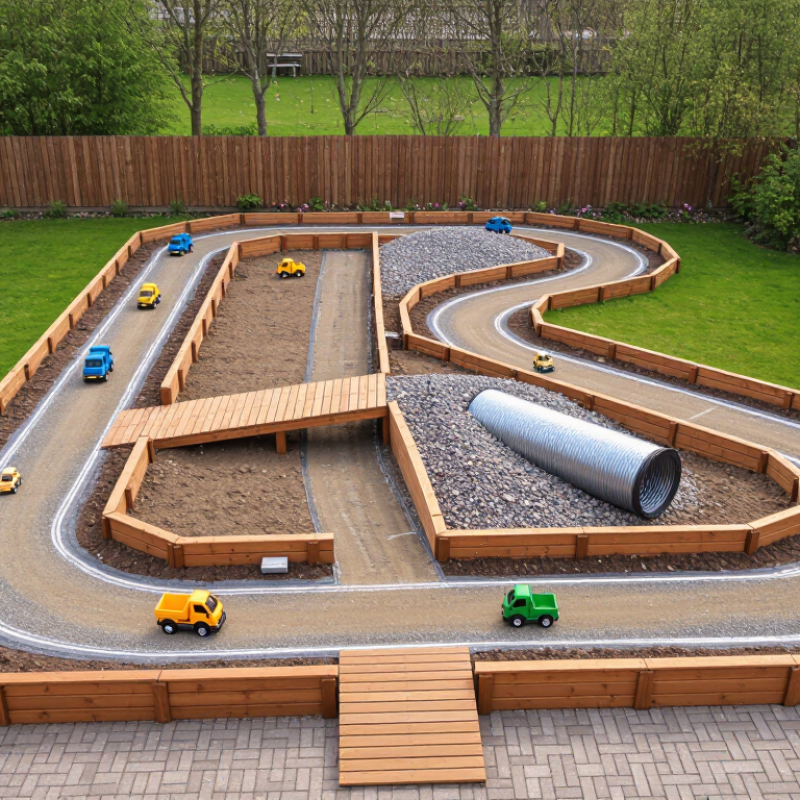
How to build a backyard track for toy trucks? Start by observing the space after rainfall. Low areas may become muddy, while exposed slopes can wash away quickly. Mark a simple route with garden stakes, then test its width using the largest toy truck. Compact soil, add small gravel, and shape gentle curves rather than sharp corners. Wooden borders can contain loose surfaces, but they must be smooth and firmly secured. Avoid deep holes, unstable ramps, and materials with sharp edges.

Small details make a noticeable difference. A shallow bridge, a gravel hill, or a cardboard tunnel can create realistic challenges. However, cardboard may weaken outdoors. That is a limitation worth considering. Recycled plastic or sealed wood may last longer, although each option has environmental and maintenance concerns. Leave enough open space around the track for children to move safely. Check the surface regularly, especially after storms. A track can change over time. That is part of the learning. Good construction combines practical experience, reliable safety habits, and room for future improvements.
What Is the Best Way to Build a Backyard Toy Truck Track?

Choosing a Safe and Suitable Backyard Track Location

Choosing the right backyard location matters more than adding complex jumps or decorations. A flat, visible area usually provides the safest foundation for a toy truck track. Keep it away from driveways, ponds, steps, and loose retaining walls. Leave a clear buffer around the track, so running trucks do not hit feet, fences, or garden tools.

Walk across the yard after heavy rain. Watch where water collects, because puddles can soften soil and collapse track edges. Firm soil is useful, but very hard ground may create sharp rebounds. A gentle slope can add interest, yet steep sections are difficult to control. Test the surface with a small hand tool before shaping the route. Check for buried irrigation lines, cables, and tree roots before digging. Local utility guidance should be followed carefully.

Choose a shaded viewing spot for adults, especially during longer play sessions. The track should remain visible from a doorway or seating area. Avoid dense shrubs that hide moving trucks or small parts. My first layout looked exciting, but afternoon glare made steering difficult. I also underestimated drainage near one corner. That mistake taught me to observe the yard at different times, not just during pleasant weather. Leave room to adjust the design later. A slightly imperfect track is easier to improve than one built beside a hazard.

Planning the Layout and Gathering the Necessary Materials

A successful backyard toy truck track begins with a simple, measured layout. Mark the driving line with string before moving any soil. A small oval often works better than a complicated course. Leave at least 60 centimeters between the track and fences, trees, or garden beds. This space makes repairs easier and reduces accidental collisions. Include gentle curves, one short slope, and a flat loading area. Children need room to reach the trucks safely.

Use cardboard to test the layout before buying materials. I once made a curve too tight, and every truck rolled into the grass. That mistake taught me to test turning space with the actual toys. For the surface, gather compactable soil, fine gravel, clean sand, and smooth edging boards. Wooden stakes, strong string, a hand tamper, a shovel, and a level are also useful. Choose untreated, splinter-free materials, and inspect them regularly.

Build the base in shallow layers. Compact each layer firmly, especially near slopes. Add a thin sand layer where wheels need smoother movement. Keep ramps low and wide, with no sharp drop-offs. A shallow drainage channel can prevent puddles after rain. Check that no nails, sharp stones, or loose boards remain. The track may look uneven at first. That is acceptable, but uneven hazards are not. Walk through the course slowly, test several truck sizes, and adjust weak corners before children use it.

What Is the Best Way to Build a Backyard Toy Truck Track? - Planning the Layout and Gathering the Necessary Materials

Planning Area Recommended Dimension Suggested Specification Materials or Preparation Practical Notes
Layout Planning
Overall footprint 6.0 m × 4.0 m Approximate area of 24 m² for a compact backyard circuit. Measure the area with stakes, string, and a tape measure before digging. Leave at least 0.9 m of clear space around the outside edge.
Main straightaway 4.5 m long × 0.75 m wide Flat section for pushing trucks, racing, and testing small ramps. Use compacted soil topped with fine gravel or outdoor play sand. Keep the running surface level to prevent unintended rolling.
Curved section Inside radius: 1.2 m One broad curve with a gradual turning angle rather than a sharp corner. Mark the curve with a central stake and string before shaping the ground. A wider radius is easier for trucks with fixed front axles.
Track width 0.60–0.75 m Suitable for most hand-pushed toy trucks and two-way play in wider areas. Use edging stones, timber, or flexible landscape edging to define the lane. Avoid narrow lanes that cause trucks to fall off the surface.
Elevation change Maximum 150 mm Low hill or shallow dip to add variety without creating a steep descent. Build with clean fill soil and compact it in layers no deeper than 75 mm. Slope surfaces gradually and remove any sharp drop-offs.
Start and finish zone 1.2 m × 0.9 m Flat staging area for lining up trucks and storing small accessories. Install a firm surface such as compacted gravel or a paving slab. Position it away from steps, gates, and regular walking paths.
Surface and Construction Materials
Base soil Approximately 1.5 m³ Clean topsoil or fill for shaping low banks, mounds, and drainage fall. Remove roots, glass, stones with sharp edges, and other debris. The required volume depends on the existing ground level.
Fine surface material 0.75–1.0 m³ Fine washed sand or small rounded gravel for a smooth, replaceable surface. Spread a layer approximately 50 mm deep over the prepared track bed. Choose material that does not contain dust, sharp fragments, or treated waste.
Landscape edging 14–18 linear m Low edging around curves and track boundaries to retain the surface material. Use untreated, rounded timber or flexible outdoor edging installed flush with the ground. Avoid exposed corners, protruding nails, and raised trip hazards.
Drainage layer 75–100 mm deep Coarse gravel beneath areas that collect water or become muddy. Place geotextile fabric below the gravel where soil and gravel may mix. Give the track a gentle cross-fall of about 1–2% for runoff.
Ramp material 0.90 m long × 0.45 m wide One low, stable ramp with a maximum rise of approximately 150 mm. Use exterior-grade plywood or solid timber with a non-slip surface. Anchor the ramp and check that the leading and trailing edges are smooth.
Tools, Safety, and Maintenance
Layout tools 1 set Tape measure, wooden stakes, string line, marker, and a small level. Use the tools to mark boundaries, verify widths, and check slopes. Confirm the layout before purchasing bulk materials.
Ground-preparation tools 1 set Hand shovel, rake, wheelbarrow, hand tamper, and garden gloves. Use a hand tamper to compact fill and prevent ruts after rain. For a larger area, a plate compactor may reduce preparation time.
Safety clearance 0.9 m minimum Clear zone between the track and fences, walls, play equipment, or planting beds. Remove low branches, exposed roots, sharp objects, and unstable structures. Inspect the entire area before each major construction stage.
Routine maintenance Every 2–4 weeks Rake the surface, refill low spots, clear leaves, and inspect edging. Keep a small reserve of the original surface material for repairs. Recheck the track after heavy rain or freezing weather.
Estimated build time 8–14 labor hours Typical range for layout, excavation, material placement, shaping, and cleanup. Work in stages: mark, prepare the base, install edging, add surface material, and test. Time varies with soil condition, access, drainage, and the number of features.

Building the Track Base, Borders, and Driving Surface

A dependable backyard toy truck track starts with a firm, level base. Mark the route, then remove grass and loose soil to a depth of about 8 centimeters. Add crushed stone in two thin layers. Compact each layer carefully. A slight cross-slope, around 2 percent, helps rainwater escape instead of forming puddles. NOAA rainfall data shows that short, intense storms can deliver heavy water quickly, so drainage should not be an afterthought.

Keep the borders low, smooth, and visible. Timber, recycled plastic edging, or rounded masonry can work when firmly anchored. Avoid sharp corners and exposed fasteners. The driving surface should stay compact but not rock-hard. Fine gravel, packed soil, or a thin sand-clay blend gives small wheels traction. Test the surface with a loaded toy truck. If the wheels sink deeply, the base needs more compaction. If they bounce, the surface may be too hard or uneven.

Tips: Build a short test section first. Check it after rain. Refill soft spots and reshape puddled areas. The U.S. Consumer Product Safety Commission recommends 9 inches of loose-fill surfacing for playground equipment up to 7 feet high, although that guidance targets fall protection, not toy tracks. Still, it reinforces one practical lesson: softer edges and impact-aware materials matter. I would not copy playground specifications blindly. A backyard track needs stable steering, clear borders, and easy maintenance. Leave room for revision. Real soil rarely behaves perfectly.

Adding Ramps, Turns, Obstacles, and Play Features

A strong backyard toy truck track feels like a small construction site, not a flat plastic lane. Start with a firm, visible route around 3–5 metres long. Add a gentle ramp, a wide turn, and one low obstacle made from smooth timber or packed soil. Real testing matters. Push several toy trucks through the course at different speeds. A ramp that looks exciting may launch trucks too far. It may also create sharp landing points.

Use the U.S. Consumer Product Safety Commission’s 2021 report as a safety reference. It estimated 155,400 emergency-department-treated injuries involving playground equipment among children under 15. A toy track is smaller, but the lesson remains useful: control falls, edges, and unexpected contact. Keep ramps low, round exposed corners, and leave clear space beside turns. Avoid tunnels that can trap hands or heads. Choose weather-resistant materials, and inspect them after rain, heat, or rough play. I would not overbuild it. Too many obstacles can make the track confusing and difficult to supervise.

Tips: Place the fastest ramp near the end, not beside a seating area. Test obstacles with empty hands first. Use shallow gravel or rubber mulch around raised features, following CPSC surfacing guidance. Add simple play features, such as a parking bay, bridge, loading zone, or finish gate. Leave one unfinished section. Children may improve it better than adults.

Testing, Maintaining, and Improving the Toy Truck Track

A backyard toy truck track improves through observation, not decoration. Before adding jumps, I roll several toy trucks across every section. Different wheels reveal loose soil, uneven slopes, and weak bridges. I watch where trucks slow, tip, or leave the track. These small failures show what needs attention. My first curve looked smooth, but trucks repeatedly climbed over its outer edge. I underestimated how quickly loose gravel would move.

After each test, I repair one problem at a time. I compact soil around turns and press small stones into soft areas. Low wooden borders can define the route, but their edges should remain smooth and secure. After rain, I check for puddles, exposed roots, and collapsed tunnels. Water often changes the track more than play does. A shallow drainage channel can protect the main route without making the course too difficult.

Maintenance works best as a short weekly habit. I remove leaves, replace displaced soil, and test every ramp by hand. Then I send trucks through at different speeds. The track should challenge control, not create sudden hazards. I once built a ramp that was too steep, and trucks landed awkwardly. Reducing its height made the course slower but far more enjoyable. Keep notes about changes. Small adjustments become easier to judge when memory is unreliable.

FAQS

What is the safest location for a backyard toy truck track?

Choose a flat, visible area with firm soil. Keep it away from driveways, ponds, steps, fences, and garden tools. Leave a clear buffer around the route. Adults should see the track from a doorway or shaded seat.

How can I check whether the ground is suitable?

Walk across the yard after heavy rain. Note puddles, soft soil, exposed roots, and sinking edges. Test the surface with a small hand tool. Very hard ground may cause harsh rebounds.

What should I check before digging?

Check for irrigation lines, buried cables, and tree roots. Follow local utility guidance carefully. Avoid digging beside unstable walls or large roots. A safer route may need less shaping.

What features should a simple track include?

Begin with a three-to-five-metre route. Add one gentle ramp, a wide turn, and one low obstacle. Smooth timber or packed soil can work well. A parking bay or loading zone adds realistic detail.

How can I make ramps and turns safer?

Keep ramps low and round exposed corners. Leave open space beside turns. Test each ramp with several trucks before play. A ramp may look exciting but launch trucks too far.

Should I add tunnels and many obstacles?

Avoid tunnels that could trap hands or heads. Too many obstacles can confuse children and complicate supervision. Keep the design simple. One unfinished section may invite better ideas.

How do I test the track before regular play?

Roll different toy trucks through every section. Try slow and fast speeds. Watch for tipping, climbing edges, weak bridges, and loose gravel. Test features by hand first. Small failures matter.

What maintenance does the track need?

Check it weekly for leaves, puddles, exposed roots, and collapsed edges. Replace displaced soil and secure smooth borders. After rain, inspect ramps and drainage again. I once made a ramp too steep. Lowering it improved control.

Conclusion

Building a backyard toy truck track can be a creative and enjoyable family project. How to build a backyard track for toy trucks? Start by choosing a visible, level area away from traffic, sharp drops, standing water, and fragile plants. Plan a simple route that matches the available space, then gather safe materials such as soil, sand, smooth stones, wooden edging, hand tools, and decorations. Mark the layout before construction so the track has enough room for children to play comfortably.

Create a firm base, shape the driving surface, and use secure borders to keep the path defined. Add gentle ramps, wide turns, tunnels, bridges, parking areas, or small obstacles while avoiding sharp edges and unstable structures. Test the track with the toy trucks and adjust slopes, corners, and surfaces that cause problems. Regularly remove debris, repair erosion, check the borders, and refresh the surface. As children develop new ideas, the track can be improved with additional routes and play features while keeping safety and accessibility as the main priorities.

Madeline

Madeline

Madeline is a dedicated marketing professional with a wealth of expertise in our company's core offerings. With a keen understanding of the industry, she brings a unique perspective to her role, consistently delivering high-quality content that highlights the superior aspects of our products. As......