Top 10 Skills Kids Learn from Toy Trucks?

Time:2026-09-23 Author:Charlotte
0%

A toy truck looks simple, yet it can become a small worksite on the living-room floor. Children load blocks, push wheels through carpet, and invent destinations for every delivery. What can kids learn from a toy truck? The answer reaches beyond naming colors or copying adult jobs. Through repeated play, children can practice planning, coordination, communication, and flexible thinking. These skills develop gradually, not automatically.

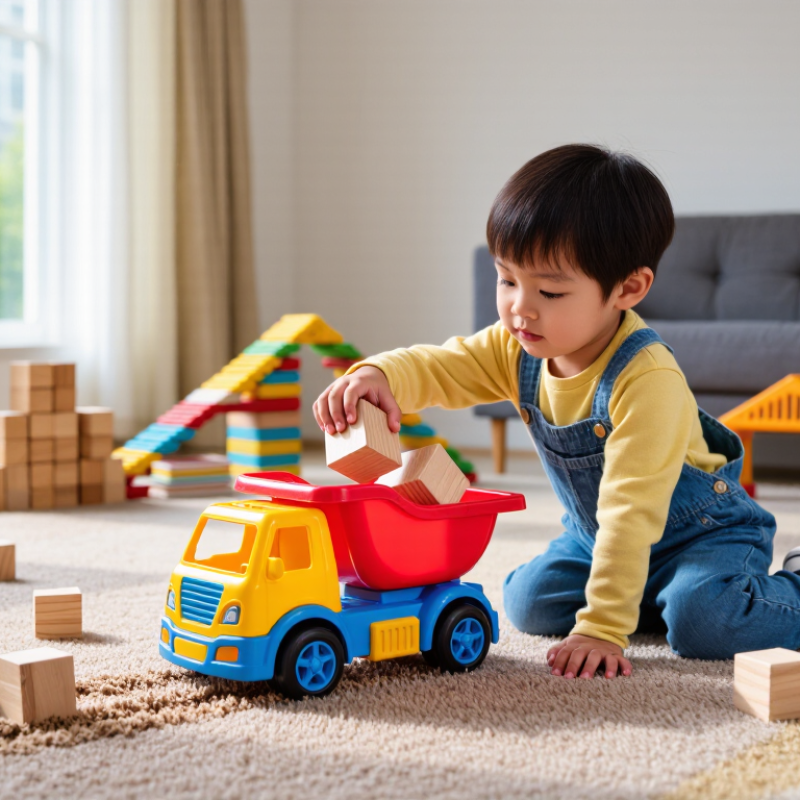
When a child balances three wooden blocks in the truck bed, careful hand movements support fine-motor control and visual judgment. Pulling the truck over a cushion builds force, direction, and persistence. A pretend road also invites problem-solving. The bridge collapses. Try again. Children may negotiate who drives, who builds, and who repairs. These moments can strengthen language, cooperation, and early social reasoning. Adults can support learning by asking open questions, waiting for answers, and allowing safe mistakes. Guidance should not replace discovery.

This article explores ten practical skills connected with toy-truck play, from spatial awareness to emotional regulation. It draws on child-development principles and everyday observations, without promising identical results for every child. A quiet child may communicate by arranging vehicles. Another child may focus on speed and noise. Both styles matter. Still, toy trucks are not magic teaching tools. Without time, interest, or supportive interaction, learning may remain limited. Their value depends on how children play, reflect, and adapt. Small wheels can carry surprisingly large lessons.
Top 10 Skills Kids Learn from Toy Trucks?

Fine-Motor Skills and Hand-Eye Coordination Through Truck Play

Toy trucks turn small movements into purposeful practice. As children push, pull, lift, and park them, their fingers repeatedly adjust pressure. This builds fine-motor control needed for drawing, dressing, and using utensils. A child may grip a truck too tightly at first. With repetition, the movement often becomes smoother. I have noticed that children concentrate longer when the truck has a clear destination. The sofa becomes a bridge. A cardboard box becomes a garage.

Truck play also strengthens hand-eye coordination. Children watch the wheels, predict direction, and guide the vehicle through narrow spaces. They learn to align a ramp, release the truck, and correct its path. These actions connect visual information with controlled hand movements.

Try placing tape roads on the floor. Add gentle turns, small blocks, or a shallow tray. Keep the challenge manageable. If the route is too difficult, frustration replaces useful practice. Not every session goes smoothly.

Adults can support learning by describing actions: “Turn left,” “Slow down,” or “Park inside.” Such language links movement with planning and spatial awareness. Avoid doing everything for the child. A little struggle matters. Still, my observation is not a scientific measurement, and children develop at different rates. Some prefer speed, while others carefully repeat one parking task. Offer time, safe open space, and trucks that are easy to grasp. The learning happens in those tiny corrections.

Spatial Reasoning and Early Engineering Concepts

Toy trucks turn floor play into a small engineering lab. As children push, pull, and park them, they compare distance, direction, and position. A truck under a chair becomes a problem of height and clearance. Children often rotate the vehicle before trying again. That pause matters. It shows spatial reasoning growing through action, not memorized terms. In my observations, children use words like “behind,” “near,” and “through” more accurately after repeated play.

Ramps add early physics. A steep board makes the truck travel faster, while a rough blanket slows it down. Children can predict which truck will reach a cup first, then test the idea. They notice balance when a load tips from the truck bed. Small changes create visible results. Educators can ask, “What could make it roll farther?” rather than fixing the design. This supports planning, testing, and revision—the basic rhythm of engineering. Adult guidance should stay brief and safe, allowing children to handle the evidence.

My first ramp activity was too easy. Every truck reached the target, so the children had little reason to rethink their designs. Adding different surfaces created better questions, although the setup became messy. That imperfection was useful. Children measured with blocks, adjusted angles, and negotiated shared space. Some guesses were wrong. Good. Wrong guesses make room for clearer observations. Simple sketches can extend the play, especially when children draw a route from the sofa to a cardboard garage. Keep the materials open-ended, and watch how each child solves the same spatial challenge differently.

Problem-Solving, Planning, and Creative Thinking

Toy trucks can turn a rug into a small construction site. Children decide where roads go, which truck moves first, and how to cross a block bridge. These choices build planning and sequencing skills. When a truck gets stuck, children test angles, change the route, or add a ramp. That is practical problem-solving, not just noisy play. The Harvard Center on the Developing Child reports that more than one million neural connections form each second during early childhood, supported by active interaction and learning. Toy trucks offer useful opportunities for that interaction.

Creative thinking grows when children invent purposes beyond driving. A truck may become a rescue vehicle, delivery van, or space explorer. The story can change quickly. That flexibility matters. UNICEF’s 2018 Learning through Play report connects play with cognitive, physical, social, and emotional development. Still, a truck does not automatically teach these skills. Passive play can happen. Adult guidance sometimes helps, but too much direction can flatten the child’s ideas.

Tips: Offer cardboard ramps, paper roads, and wooden blocks. Ask, “What could work?” instead of giving the answer. Let children predict before testing. Notice their attempts, including failed ones. Keep the play open-ended. A perfect road is not the goal. The reasoning is. Be patient when the same crash happens repeatedly; repetition may be part of the experiment, though adults can mistake it for progress.

Language Growth, Storytelling, and Social Cooperation

Toy trucks can turn ordinary floor play into a small language laboratory. As children push a truck under a chair, they hear and use action words such as “drive,” “stop,” and “rescue.” Adults can model richer phrases without controlling the story. “The blue truck is stuck in mud” invites description, prediction, and questions. Repeated play also strengthens memory for new words. Some children speak more during play; others communicate through sounds, gestures, or careful movements. All these attempts matter.

Tips: Keep two or three trucks nearby with blocks, paper roads, or a cloth tunnel. Ask open questions: “Where is it going?” or “What happened?” Pause before answering. Let the child lead. If the story becomes confusing, repeat the child’s idea and gently add one detail. Avoid constant correction. Perfect grammar is not the goal.

Shared truck play also teaches social cooperation. Children practice taking turns, negotiating routes, and solving conflicts over one special vehicle. A timer may help, but conversation works better when children agree on a plan. One child might build a bridge while another delivers pretend supplies. Adults should notice quiet children and invite them clearly. In my experience, this play can become noisy and uneven. That is useful, too. Real cooperation needs repair, patience, and another try. Speech-language professionals often encourage responsive interaction, yet every child develops differently, so observations should remain flexible.

Independence, Focus, and Real-World Understanding

Toy trucks turn a living-room rug into a small worksite. Children choose routes, load blocks, and decide when a delivery is complete. That control quietly builds independence. UNICEF’s 2018 Learning through Play report identifies play as active, engaging, iterative, social, and meaningful. Truck play can match all five qualities. An adult might provide cardboard ramps, wooden blocks, or a shallow tray of rice. Then the child leads. Avoid correcting every turn. Real learning needs room for mistakes.

Focus grows through small challenges. A child may spend several minutes balancing three blocks before moving the truck. The American Academy of Pediatrics’ clinical report, The Power of Play, links play with executive function, language, and early problem-solving. These skills appear in ordinary moments, such as waiting, planning, and trying again. Circana’s recent toy-market reporting continues to track vehicles as a major traditional-toy category, reflecting their lasting place in children’s play patterns. However, market popularity does not guarantee meaningful learning. Some children repeat the same route without exploring new ideas. Adults can ask, “What could carry more?” or “Where does this road end?” Questions support deeper thinking without taking control. Toy trucks also introduce real-world understanding. Children notice weight, distance, traffic, workers, and cause and effect. A cardboard box may become a garage, though the design may collapse quickly. That failure matters. It invites rebuilding, negotiation, and a second attempt.

Top 10 Skills Kids Learn from Toy Trucks? - Independence, Focus, and Real-World Understanding

Rank Skill Developed What Children Practice Real-World Understanding Observable Example Typical Developmental Area
1 Independence Choosing routes, setting up play areas, and deciding how to use the truck. Children experience decision-making and personal responsibility in a low-risk setting. Creates a delivery path and completes a self-chosen task without constant adult direction. Executive function and self-management
2 Focused Attention Following a route, carrying objects, and staying engaged with a play goal. Children learn that completing a task often requires sustained attention. Repeats a loading or transport activity while adjusting the truck to stay on course. Attention and persistence
3 Fine-Motor Control Gripping, pushing, pulling, loading, unloading, and positioning small objects. Children coordinate hand movements with visual information to control objects. Places several items into a truck bed and removes them without tipping the load. Hand-eye coordination and motor planning
4 Spatial Awareness Exploring distance, direction, position, size, and movement through space. Children build an early understanding of how objects fit and move in relation to one another. Navigates around furniture, through a tunnel, or under a raised bridge. Visual-spatial reasoning
5 Cause and Effect Testing how speed, surfaces, slopes, and obstacles affect movement. Children observe that actions produce predictable results and can be changed. Notices that a truck rolls farther on a smooth surface than on a thick carpet. Early scientific reasoning
6 Problem-Solving Planning alternatives when a route is blocked or a load does not fit. Children learn to identify a problem, try a solution, and revise their approach. Moves an obstacle, changes direction, or selects a smaller item for the truck bed. Cognitive flexibility and reasoning
7 Early Math Concepts Comparing quantities, sorting objects, counting loads, and recognizing size differences. Children connect numbers and measurement words to meaningful actions. Counts how many blocks fit, compares full and empty loads, or sorts items by size. Numeracy and classification
8 Communication Using action words, describing plans, giving directions, and explaining what happened. Children practice language for sequence, location, movement, and cooperation. Says, “The truck is behind the building,” or explains where the load should go. Language development
9 Cooperation and Turn-Taking Sharing vehicles, assigning roles, negotiating routes, and waiting for turns. Children rehearse social rules used in group tasks and shared community activities. One child loads while another drives, then they switch roles. Social-emotional learning
10 Real-World Understanding Imitating transport, construction, delivery, road use, and community work. Pretend play helps children represent familiar jobs, systems, and everyday routines. Builds a pretend worksite and transports materials from one location to another. Symbolic play and social understanding

Skills develop through repeated, child-led play and vary according to age, experience, and the play environment.

FAQS

How do toy trucks support fine-motor skills?

Children push, pull, lift, and park trucks with changing finger pressure. These repeated movements support drawing, dressing, and utensil use. Grip improves slowly. Practice matters.

How can truck play improve hand-eye coordination?

Children watch the wheels and guide trucks through narrow spaces. They align ramps, release vehicles, and correct mistakes. Tape roads and small blocks create useful challenges.

What materials can create a simple truck-play setup?

Use tape roads, cardboard boxes, wooden blocks, shallow trays, and a firm board. A sofa can become a bridge. Keep the area open and safe.

How do ramps introduce early engineering ideas?

Children compare steep and gentle ramps. Rough fabric slows a truck, while a smooth board may increase speed. They predict, test, and adjust the setup.

What questions can adults ask during truck play?

Ask, “What could make it roll farther?” or “Where does this road end?” Brief questions encourage planning without controlling every move. Let children investigate.

How does truck play encourage independence?

Children choose routes, load blocks, and decide when a delivery is complete. Adults can provide materials, then step back. Small decisions build confidence.

Can truck play improve focus?

A child may spend several minutes balancing three blocks before moving a truck. Small problems invite waiting, planning, and trying again. Attention grows through manageable challenges.

What happens when a truck-play design fails?

A cardboard garage may collapse, or a load may tip from the truck bed. Children can rebuild and test another idea. Failure becomes useful, though not always calmly.

Do all children learn the same way through truck play?

No. Some children prefer speed, while others repeat one parking task carefully. My observations are limited, not scientific measurements. Development varies, and that matters.

Conclusion

What can kids learn from a toy truck? Through imaginative truck play, children can develop fine-motor skills and hand-eye coordination as they push, pull, load, unload, and steer the vehicle. They also begin to understand spatial relationships, balance, distance, and simple engineering ideas by building paths, ramps, bridges, or pretend construction sites. These activities encourage children to plan ahead, solve small challenges, test ideas, and think creatively when obstacles appear.

Toy truck play can also support language growth and storytelling as children describe actions, create characters, and explain what is happening in their pretend world. When playing with others, they practice sharing, communication, turn-taking, and cooperation. At the same time, completing simple tasks independently can build confidence, patience, focus, and persistence. By connecting play with familiar experiences such as transportation, delivery, building, and community work, children gain an early understanding of how people and objects function in the real world.

Charlotte

Charlotte

Charlotte is a seasoned marketing professional with a deep understanding of the company's portfolio and a passion for elevating its presence in the market. With a keen eye for detail and a commitment to excellence, she ensures that our professional blog is regularly updated with insightful articles......