Toy trucks are more than just fun playthings; they play a vital role in the development of children. Many parents often wonder, "How do toy trucks help with motor skills?" The answer lies in their design and functionality. When children manipulate these trucks, they engage in activities that require hand-eye coordination, grip strength, and fine motor precision. Gripping small wheels and pushing or pulling the trucks can be a delightful challenge.
As children push these toy vehicles, their arms and hands build strength. This simple action improves balance and dexterity. Moreover, using toy trucks encourages imaginative play, allowing kids to create elaborate scenarios. This creativity often requires them to maneuver the trucks in different ways, leading to greater physical activity and engagement.
However, it's essential to note that not all children may see the same benefits. Some may struggle with coordination more than others. Recognizing these challenges is crucial to tailoring play experiences. With guidance, children can learn important skills through simple play. In this way, toy trucks serve as powerful tools for developing motor skills and enhancing a child's overall growth.
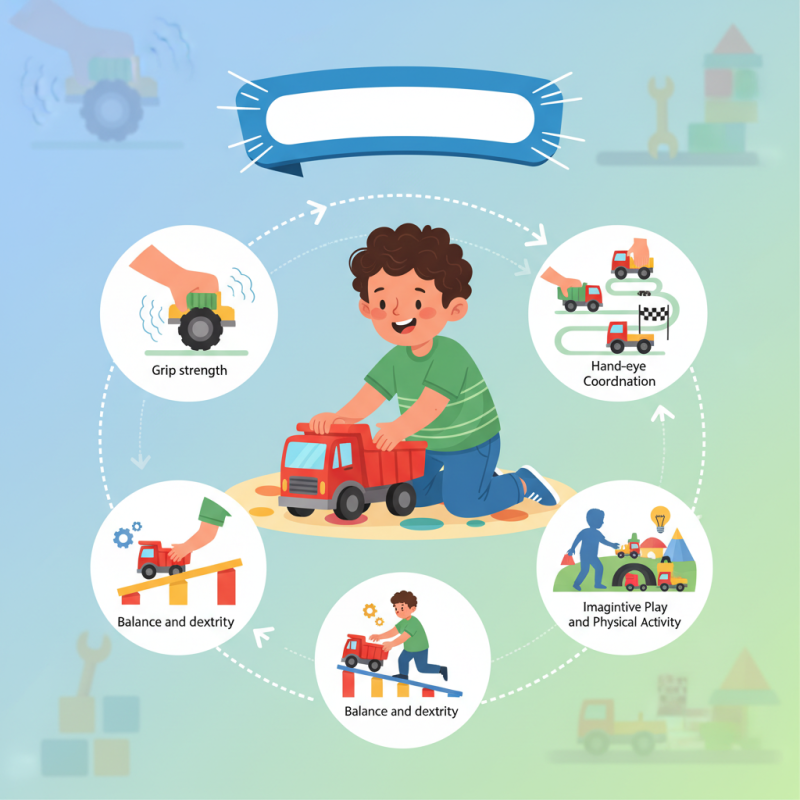
Toy trucks are not just fun; they play an important role in developing fine motor skills in children. As kids grasp, push, and maneuver these trucks, they engage their hands in a variety of movements. This repetitive action enhances their hand-eye coordination and dexterity. Children learn to control their grip, which is vital for future skills like writing and using tools.
In playing with toy trucks, children experiment with pushing, pulling, and stacking. These activities require different hand movements that strengthen their fingers and palms. For instance, lifting a toy truck requires using both hands, which builds strength and coordination. Such interactions can lead to improved control over crayons and pencils in later stages.
Tips: Encourage your child to race toy trucks. Create tracks with household items to inspire creativity. Encourage them to build ramps or obstacles, integrating problem-solving into playtime. Ensure to engage with your child during play to foster communication skills. Focus on allowing errors; these provide valuable lessons. Children learn best through experimentation, even if it gets messy!
Toy trucks are more than just playthings; they play a crucial role in developing hand-eye coordination in children. Studies show that children engaging in motion-based play increase their ability to coordinate visual input with physical movement. The American Academy of Pediatrics emphasizes this aspect, stating that active play enhances fine motor skills and coordination.
When children manipulate toy trucks, their hands and eyes work together. They might push the trucks along a surface and watch as they roll. This simple action involves tracking the vehicle with their eyes while coordinating their hand movements to control speed and direction. According to research by the Journal of Child Development, children who regularly engage in such play show a 30% improvement in hand-eye coordination by the age of five.
Hands-on play with toy trucks invites creativity, but it can also present challenges. Some children may struggle with controlling the truck's movement at first. They might crash into obstacles or have difficulty steering. These experiences are vital for learning. Over time, they learn to adjust their movements based on feedback from their play environment. This iterative process fosters resilience and adaptability in their motor skill development.
This chart illustrates the impact of toy truck play on hand-eye coordination in children aged 3-6 years. The data shows that children who engage in toy truck play experience significant improvements in various motor skills over a 6-month period.
Toy trucks serve as an engaging tool for children to develop their gross motor skills. During playtime, children actively maneuver and push these trucks, which promotes hand-eye coordination. According to the American Academy of Pediatrics, active play is essential for healthy physical development in children aged 2 to 5. This age group needs at least 3 hours of physical activity per day, including play with toys that require movement.
Toy truck activities encourage crawling, walking, and running. As children navigate their play area, they build strength in their legs and arms. They often lift and steer their trucks, which enhances grip and dexterity. A study from the American Journal of Occupational Therapy suggests that such manipulative play boosts muscle development and coordination. These activities can also help children learn problem-solving skills as they figure out how to navigate obstacles during play.
However, not all children may engage with toy trucks equally. Some may prefer other forms of play or struggle with motor skills development. It’s important for caregivers to observe and encourage a variety of activities. This ensures every child can explore their interests while benefiting from the physical aspects of toy truck play. By providing a range of experiences, caregivers can support each child's unique journey in developing their motor skills.
Playing with toy trucks is more than just fun. It promotes social interaction and cooperative play among children. A study from the American Academy of Pediatrics highlights that children involved in cooperative play develop essential communication skills. When kids share toy trucks, they negotiate roles, share ideas, and create stories, which fosters their ability to work together.
Tips for promoting social interaction: Encourage group play sessions with multiple trucks. Set up scenarios where kids can work together to build structures or complete tasks. This engagement not only boosts their verbal skills but also nurtures empathy and teamwork. Engaging in pretend play enhances their imagination and cognitive processing too.
While children enjoy these interactions, it’s crucial to monitor their experiences. Some might struggle with sharing or taking turns. Parents can support these challenges by guiding kids through conflicts. Teaching them to express feelings and frustrations aids their emotional development. Observing how they navigate these social dynamics provides insight into their growing motor skills and emotional resilience.
Playing with toy trucks offers more than just entertainment; it contributes significantly to cognitive development in children. Engaging with these toys enhances spatial awareness. One study found that children who played with block-based toys, which include trucks, improved their understanding of spatial relationships by 30%. This improvement is crucial as spatial skills lay the foundation for later success in math and science.
While many parents may overlook the importance of playtime, it is worth noting that unstructured play helps boost creativity. In fact, a report by the American Academy of Pediatrics emphasizes that children need ample playtime to develop essential problem-solving skills. Manipulating toy trucks can help children learn cause and effect through trial and error. They learn what happens when they push a truck downhill versus on a flat surface. This hands-on experience is irreplaceable.
However, it is essential for caregivers to observe how children interact with these toys. Some kids may struggle initially, which can lead to frustration. This struggle can be a valuable learning moment, teaching resilience. Providing a supportive environment while encouraging exploration can foster a love for learning. When children play with toy trucks, they are not just passing time; they are laying the groundwork for future cognitive success.
| Age Group | Motor Skill Type | Benefits | Spatial Awareness Improvement |
|---|---|---|---|
| 2-3 years | Fine Motor Skills | Grasping, pushing, and pulling actions enhance dexterity. | Begins to understand object permanence and locations. |
| 3-4 years | Gross Motor Skills | Running and maneuvering encourage coordination and balance. | Increased ability to navigate physical spaces. |
| 4-5 years | Hand-Eye Coordination | Improves timing and control through interactive play. | Ability to estimate distances while playing. |
| 5-6 years | Problem Solving Skills | Encourages critical thinking through imaginative play scenarios. | Enhanced understanding of spatial relationships and dimensions. |
: Toy trucks require children to track their movement visually while coordinating hand actions to control them.
Active play enhances fine motor skills and encourages coordination, promoting physical development in young children.
Children need at least 3 hours of physical activity daily, including play with movement-oriented toys.
Regular play can lead to a 30% increase in hand-eye coordination by age five.
Yes, some children may struggle initially, crashing or steering poorly, which is essential for their learning process.
They build gross motor skills, strength in arms and legs, grip, and dexterity through active manipulation.
Observing and encouraging various activities can allow children to explore interests and develop motor skills effectively.
No, individual preferences vary. Some may prefer other play forms, so variety is crucial for growth.
Yes, as children navigate obstacles, they learn to solve problems and adjust their strategies during play.
Learning from challenges during play fosters adaptability and promotes growth in motor skills and confidence.
Toy trucks serve as valuable tools for enhancing motor skills in children through various forms of play. How do toy trucks help with motor skills? First, they facilitate fine motor skill development as children grasp, push, and manipulate the vehicles, strengthening their hand muscles and dexterity. In addition, playing with toy trucks significantly improves hand-eye coordination as children aim to navigate their trucks through obstacles or follow paths, integrating visual and motor functions.
Furthermore, toy truck activities also support the development of gross motor skills, as children engage in activities that involve running, bending, and using their whole bodies. This type of play encourages social interaction and cooperative play, promoting teamwork and communication skills among peers. Finally, engaging with toy trucks fosters cognitive development by enhancing spatial awareness and problem-solving skills, allowing children to understand their environment better. Overall, toy trucks play a multi-faceted role in nurturing motor skills and overall child development.

Turbo Truck