Can you wash a toy truck in the dishwasher? The answer depends on its materials, moving parts, and hidden electronics. A sturdy, all-plastic truck may survive a gentle cycle. However, heat and strong detergent can damage paint, rubber tires, stickers, and small axles. Some trucks look simple but contain metal screws or battery contacts.
Carolyn Forté, Executive Director of the Home Care & Cleaning Lab at Good Housekeeping, offers a useful rule: “When in doubt, wash delicate items by hand.” That advice fits toy trucks well, although it does not answer every situation. Check the manufacturer’s care instructions before placing anything inside the machine. Remove batteries, lights, sounds, and loose accessories. Never assume a waterproof-looking toy is dishwasher-safe.
A safer method is often easier. Fill a basin with warm water and mild dish soap. Use a soft toothbrush around the wheels, cab, and undercarriage. Rinse carefully, then dry the truck with a clean towel. Leave it in a ventilated place until every inner space feels dry. Dishwasher cleaning can be convenient, but convenience may hide a mistake. A high-temperature cycle could warp thin plastic or loosen decals. Even hand washing requires judgment, especially when grime sits inside a sealed compartment. This guide will examine which toy trucks may handle dishwasher cleaning, which ones should not, and how to reduce damage when cleaning becomes necessary.
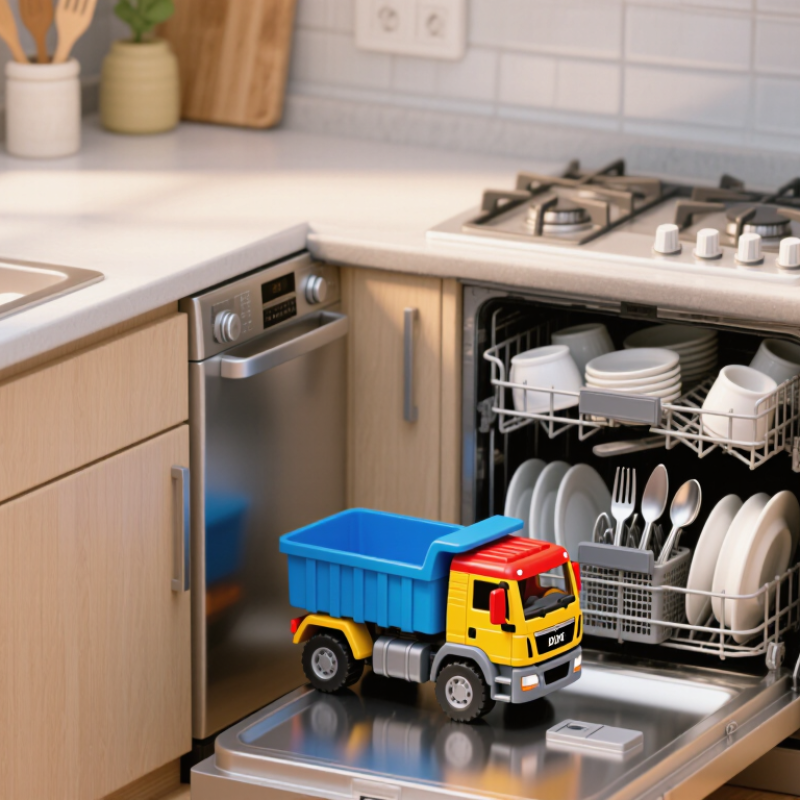
Can You Wash a Toy Truck in the Dishwasher?
A toy truck’s dishwasher safety depends on its materials, not its shape. Solid, heat-resistant plastic may tolerate a gentle cycle, but soft plastic can warp near heating elements. Rubber tires may swell, crack, or lose their grip. Painted details and printed windows can also fade under hot water and detergent.
Check the care label or product instructions before loading anything. Remove batteries, electronic parts, fabric pieces, and metal axles whenever possible. Wooden trucks should stay out of the dishwasher because water and heat can lift finishes or cause swelling. I once washed a plastic truck on the lower rack and found one wheel slightly distorted. The truck still rolled, but not smoothly.
The upper rack is usually safer because it exposes toys to less direct heat. Place small parts in a closed mesh container, and choose a short cycle with mild detergent. Skip heated drying. Air-dry every piece completely, especially around wheel joints and hollow compartments. Dishwasher detergent can leave a chalky film on textured plastic. Hand washing is often better for older toys, painted surfaces, or mixed-material trucks. Not every clean toy needs high heat.
Before washing a toy truck, inspect every material and connection. A dishwasher uses intense heat, water pressure, and detergent chemicals. These conditions can warp plastic, loosen axles, or remove painted details. Check the manufacturer’s care instructions, if available. No instructions? Hand washing is the safer choice.
Remove batteries, electronic parts, fabric seats, stickers, and metal components first. Look for cracks around the wheels and tiny openings that could trap dirty water. The U.S. Consumer Product Safety Commission reported about 231,000 toy-related emergency-department injuries among children under 15 in 2023. That figure does not prove dishwashers cause injuries, but it reinforces careful inspection. Broken parts can become sharp or detachable.
If the truck is dishwasher-safe, place it on the top rack. Use a mild detergent and avoid heated drying when possible. High heat can soften plastic unexpectedly. ASTM F963 toy-safety testing addresses components such as small parts, sharp points, and accessible edges, but certification does not guarantee dishwasher durability. After washing, check the axles, wheels, seams, and battery compartment. Dry every cavity completely.
I would not rely on appearance alone; a truck may look clean while retaining moisture inside. When uncertain, warm water, mild soap, and a soft brush remain the more controllable option.
Before a toy truck enters a dishwasher, prepare it as though water could reach every hidden seam. That assumption prevents expensive surprises. Remove batteries, lights, sound units, and detachable electronic parts. Never place powered components near water. Check the underside for screws, cracks, and loose wheels. A small opening can trap moisture inside the body.
Shake out sand, soil, and dried mud outdoors. Use a soft brush around the axles and wheel wells. This protects the dishwasher filter from gritty debris. Remove stickers or paper labels if they are already peeling. They may dissolve and clog the drain. I also inspect the plastic for fading, brittleness, or old repairs. Weak plastic may warp under hot water.
If the truck contains metal parts, examine them carefully. Heat and detergent can encourage rust on exposed areas. Test a hidden section with mild soap and a damp cloth. This simple check is easy to skip, but it can reveal color bleeding. For a washable plastic truck, place it on the top rack and secure it firmly. Keep it away from the heating element. Use a gentle cycle and skip strong drying heat. Hand washing is safer when the instructions are missing or unclear. I have found that “dishwasher-safe” is not always obvious from appearance. When uncertain, I choose a basin, lukewarm water, and a soft cloth.
A toy truck can sometimes go in the dishwasher, but check its construction first. Avoid washing trucks with batteries, lights, speakers, fabric, wood, or glued decorations. Removable metal parts may also rust. Read the care label, if one exists. When no guidance is available, hand washing is the safer choice.
Remove loose pieces, wheels, stickers, and hidden dirt before loading the truck. Rinse dried mud under warm water. Place the truck on the top rack, away from the heating element. Put small parts inside a closed mesh bag or dishwasher basket. Use a gentle cycle with warm water and a small amount of mild detergent. Skip the heated drying setting. High heat can bend plastic and loosen painted details. Keep it simple.
After the cycle, shake water from the axles and cabin. Dry every opening with a clean towel. Leave the truck in a ventilated place for several hours. Check for cracked plastic, peeling paint, sharp edges, or trapped water before giving it back to a child. One easy mistake is assuming a clean appearance means complete dryness. It does not. If the truck feels soft, smells unusual, or contains trapped moisture, wash it by hand next time and let it dry longer.
After washing a toy truck in the dishwasher, drying deserves more attention than many people expect. Remove it promptly and shake out trapped water from the cab, wheel wells, and underside. Place the truck on a clean towel in a warm, well-ventilated room. Avoid intense heat, which can soften plastic or damage painted details. Let it air-dry for at least 24 hours. I once reassembled a similar toy too soon. Moisture later appeared around the axle.
Inspect every part before rebuilding the truck. Check the wheels for looseness, cracks, or rough movement. Examine the axles for rust, bending, or trapped food residue. Look inside battery compartments, if present, and remove the batteries before cleaning. The contacts should be completely dry and free from corrosion. Press each panel gently. It should feel secure, not flexible or warped. Dishwasher cleaning is not suitable for every toy, and I should have checked the care instructions earlier.
Tips: Use a cotton swab for narrow openings. Spin each wheel by hand. If it drags, inspect the axle again. Keep small screws in a shallow tray during reassembly. Follow the original order, but do not force a part into place. A leftover screw is a warning sign. Let the truck sit longer if any hidden moisture remains. Test it on a dry floor only after every component feels stable.
The chart shows a practical time plan for handling a toy truck after dishwasher cleaning. Dishwasher duration and air-drying time vary by appliance, toy material, water temperature, and part design. Always confirm that the truck and its removable parts are dishwasher-safe, then inspect every part before reassembly.
Sometimes, but only after checking its care instructions. If unclear, hand washing is safer.
Remove batteries, lights, sound units, fabric seats, stickers, and detachable electronic parts.
High heat may soften plastic, warp the body, loosen axles, or remove painted details.
Place it securely on the top rack, away from the heating element.
Shake off sand outdoors. Use a soft brush around axles and wheel wells.
They may rust when exposed to heat, detergent, and trapped moisture. Inspect them carefully first.
Do not use the dishwasher. Cracks can trap dirty water or create loose, sharp parts.
Dry every seam, cavity, axle, and battery compartment completely. Appearance alone is not enough.
Usually, yes. Use lukewarm water, mild soap, and a soft cloth.
Stop using that cleaning method. Color bleeding suggests the surface may not tolerate water or detergent.
Can you wash a toy truck in the dishwasher? In many cases, the answer depends on the truck’s materials and construction. Solid plastic parts without batteries, fabric, decals, or electronic components may tolerate a gentle dishwasher cycle, while metal axles, rubber tires, painted surfaces, and glued details could be damaged by heat, water pressure, or detergent. Before washing, check for cracks, loose parts, rust-prone components, and any hidden electronics. Remove detachable pieces, rinse away heavy dirt, and place the truck securely on the top rack so it cannot move around.
Use a mild cycle with warm rather than high-temperature water, and avoid harsh cleaning products. After the cycle, remove the truck promptly and allow every part to air-dry completely. Inspect the wheels, axles, paint, and connections for warping, discoloration, looseness, or trapped moisture. Clean and dry small parts separately if needed, then reassemble the toy carefully and test that the wheels and moving features work properly before giving it back to a child.

Turbo Truck